

What is the FaMed Exam?
A comprehensive guide to the FaMed exam format, stations, and process for international doctors in Germany
FaMed Exam Examples
Watch examples from real FaMed exams
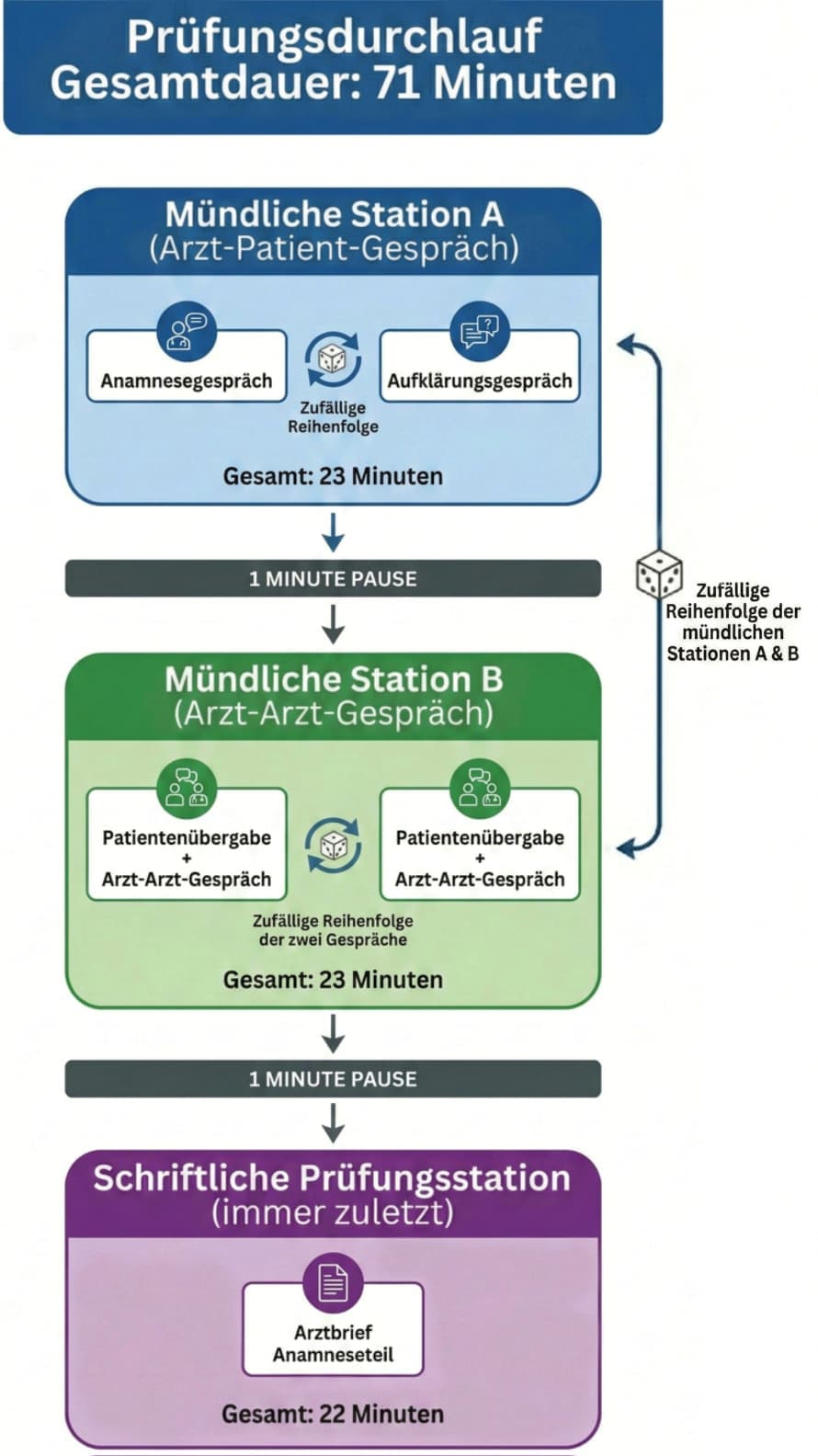
The core concept of the FaMed exam:
The FaMed exam is a practical language test specifically designed for medical communication in German. It assesses how well you can conduct medical conversations, use professional terminology, and communicate effectively with both patients and colleagues in a clinical setting.
The exam consists of 3 different stations, each lasting 22 minutes – together they test all the essential communication skills you'll need in everyday medical practice.
What is NOT tested in the FaMed exam:
Your medical knowledge or theoretical expertise isn't being tested here – that's assumed. FaMed focuses purely on how you apply your skills in realistic medical situations and your ability to communicate professionally in German.
How the exam timeline works:
- Station 1 (22 mins): Doctor-Patient Interview – You conduct a consultation with a standardized patient
- Station 2 (22 mins): Doctor-Doctor Discussion – You present a case to a colleague and discuss treatment
- Station 3 (22 mins): Medical Documentation – You write a complete medical report
- Total duration: about 1 hour overall (plus waiting time between stations)
Taking a Medical History: The Patient Interview
First station: You sit across from a standardized patient and conduct a real medical history interview in German. This is your chance to show you can actually communicate with patients – not just pass a language test, but build genuine understanding.
- Smart questioning: Ask what matters, not just go through a checklist
- Show empathy: Make the patient feel heard and respected
The real skill: Use medical terminology confidently, but explain it in plain terms when needed – that's real clinical practice.
Case Presentation: Professional Colleague Communication
Time to shine professionally: You present your case to a colleague-doctor. This tests your ability to think clinically, use precise medical language, and have a real professional dialogue. It's about demonstrating you can talk shop with German doctors.
- Clear structure: Symptoms → Findings → Diagnosis – in logical order
- Medical confidence: Use medical terminology accurately and naturally
- Discussion-ready: Be prepared to answer questions and discuss approaches
The goal: Show you can engage in meaningful professional dialogue, not just recite information.
Writing a Medical Report: The Clinical Letter
Station 3 is often underestimated – and that's a mistake. You write a complete, clinically accurate medical report. This is real German clinic life: good documentation isn't optional, it's everything.
What's being assessed:
- Clear organization: History, Findings, Diagnosis – each in its proper place
- Precise medical language: The right terminology used correctly
- Logical flow: Another doctor reading your report immediately understands the situation
- Clinical thinking: Not just diagnosis, but also therapeutics
- Flawless German: Correct spelling and grammar in professional medical writing
- Standard compliance: Meeting German documentation requirements
Reality check: German doctors spend a lot of time writing reports. This station tests if you can do it well – and if your German colleagues will actually want to work with your documentation.